
› Members Forum › Kit Building › Loco Chassis › Y6 Tram Chassis
- This topic has 21 replies, 4 voices, and was last updated 3 years, 1 month ago by
Bob Allison.
-
AuthorPosts
-
-
May 31, 2023 at 4:49 pm #245146
 Paul TomlinsonParticipant
Intro: I haven’t built anything in 4mm for over 30 years – my last and failed attempt was an Impetus Ruston 48DS kit – after which I found working in 7mm more suited to my fat fingers… I fancied something to run up and down on my EMGS RTR track, so turned to an old D&S Y6 tram kit I still had, and enquired whether anyone had the chassis kit to complete it. No offers, but Paul Willis posted some pictures of his Connoisseur Y6 with a CSB-supported chassis, and encouraged me to have a go at making my own. I had a John Gardner drawing from the GERS, so scaled it down to 4mm and cut out the frame blanks.
Attachments:
-
May 31, 2023 at 4:55 pm #245148Paul TomlinsonParticipant
It being a long time since I’d worked in 4mm, I had to scout around for current suppliers, to see what was available, and purchased this frame assembly jig from Wizard/Comet. The “buttons” locate in the 6mm wide slots, and I used the same Comet frame spacers. I intended to follow Paul’s CSB example, so fitted some “WD” handrail knobs to support the wire.
Attachments:
-
May 31, 2023 at 5:04 pm #245150Paul TomlinsonParticipant
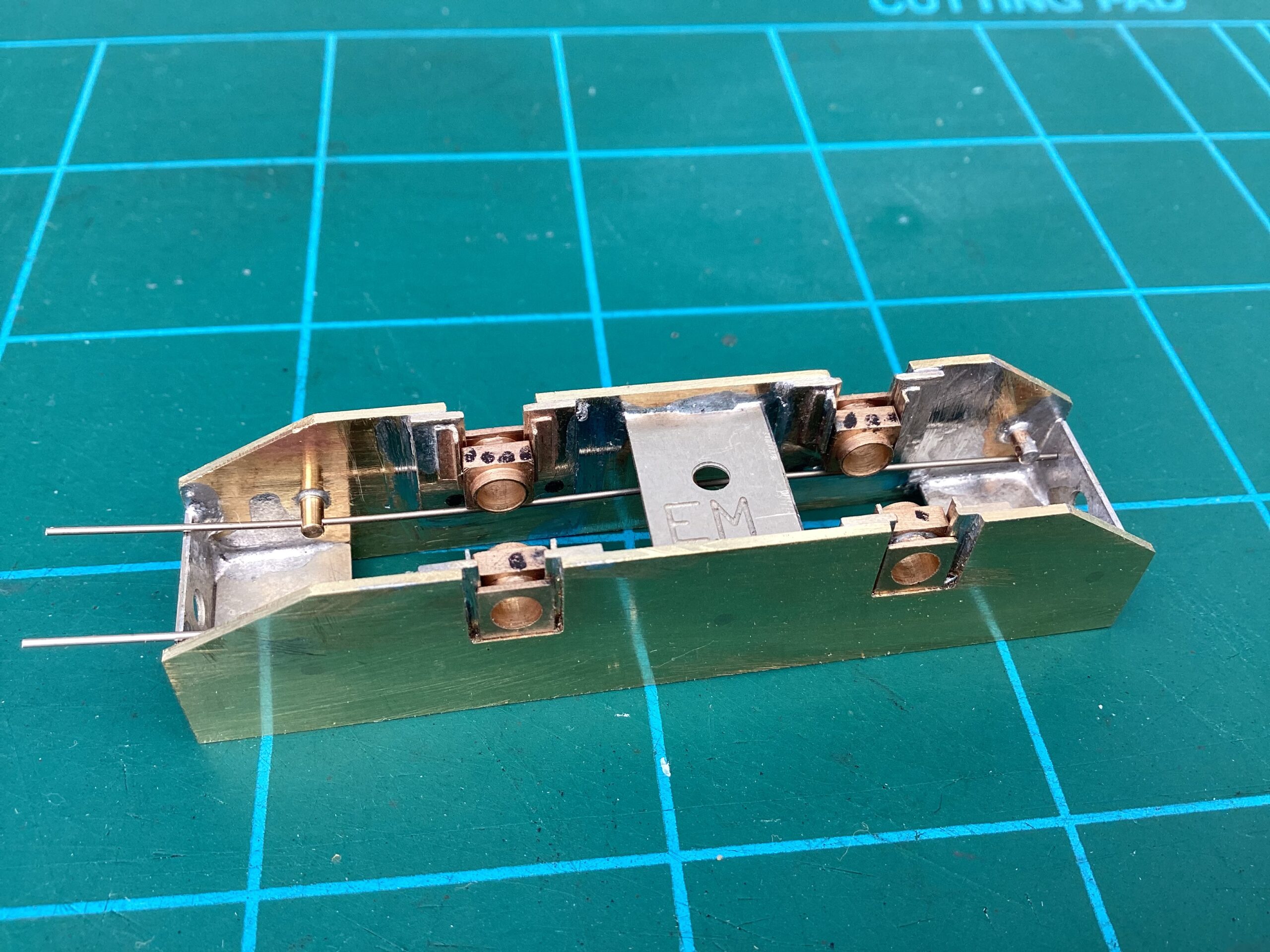
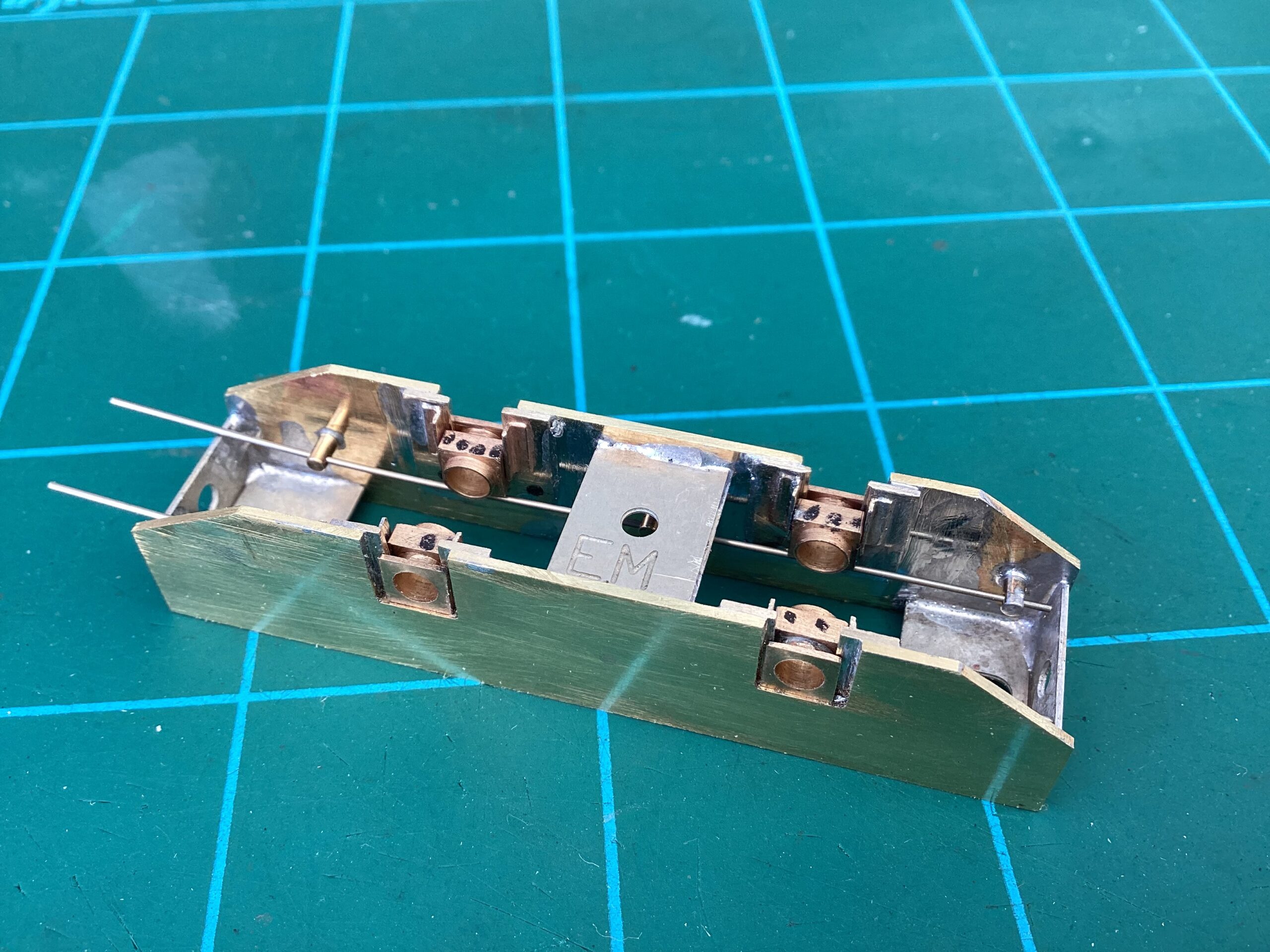
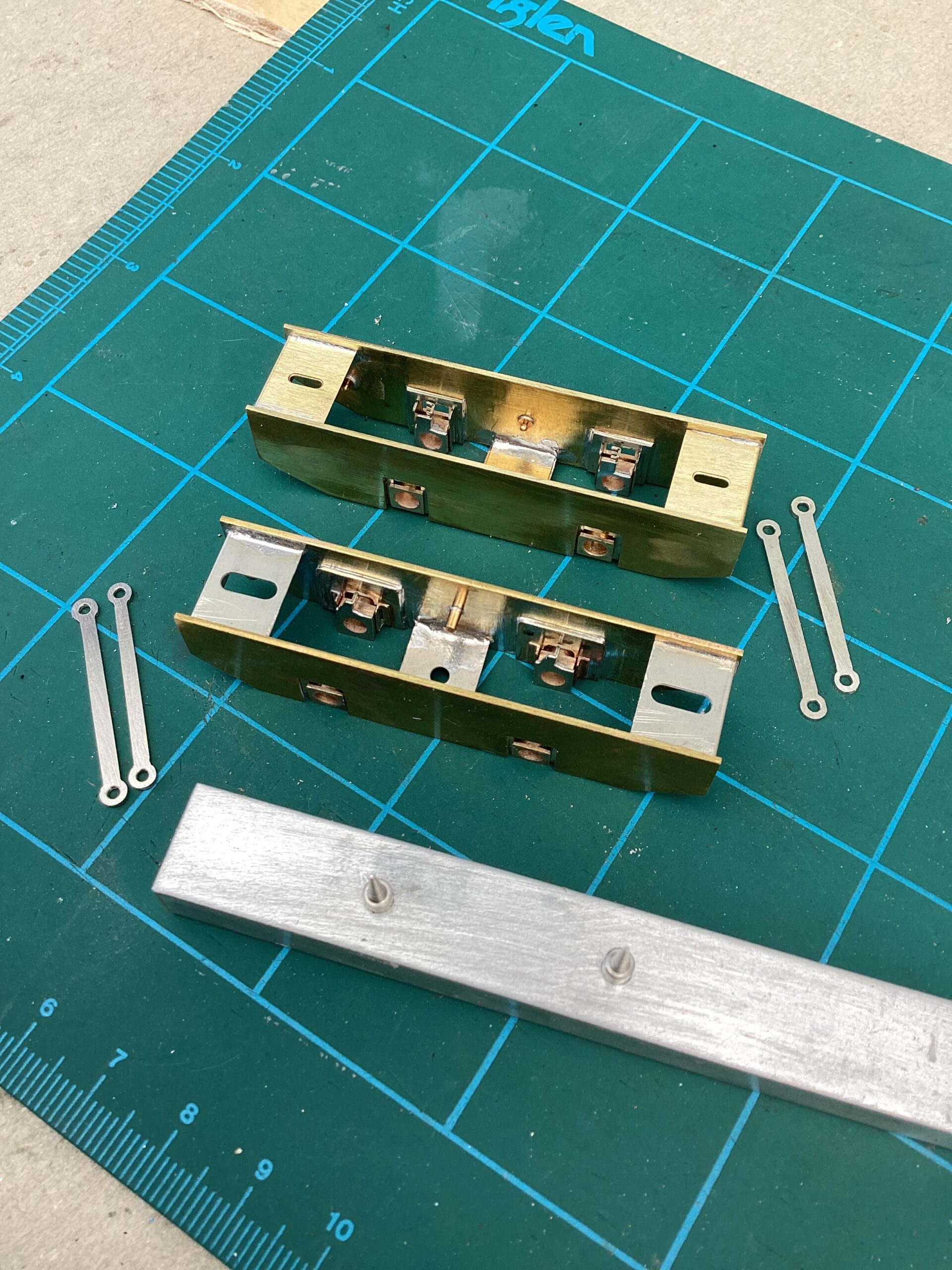
I chose hornblocks from LRM – I use a related design in 7mm, so they were familiar to me. I had a torrid time locating them accurately, and several times questioned my sanity. I used a box from Poppy’s, and some rods I’d fretted out at 26mm centres. I’ve popped a bit of n/s wire in to check the alignment – I’ve yet to solder onto the hornblocks the CSB brackets. I’m going to have to remove some of the inner bearing in order to provide room for a gearbox – I’m aiming for 7mm or so, and there’s the Slimliner Plus box from High Level (currently o.o.s.) or a slimline 51:1 one from Branchlines that’ll fit. In the meantime, I can clean up some of the messy soldering…
Attachments:
-
June 1, 2023 at 10:58 am #245157
 Stuart FirthParticipant
That looks a very tidy and solid job. I’m interested in how you attach the CSB beams to the hornblocks – Can they not just rest across the top as with your test wire?
-
June 1, 2023 at 11:35 am #245158Paul TomlinsonParticipant
Stuart, thanks very much for your interest – I’d also like to thank you for your interesting build articles in the Newsletter, esp. your adaptation of the Hornby Caley “Pug”.
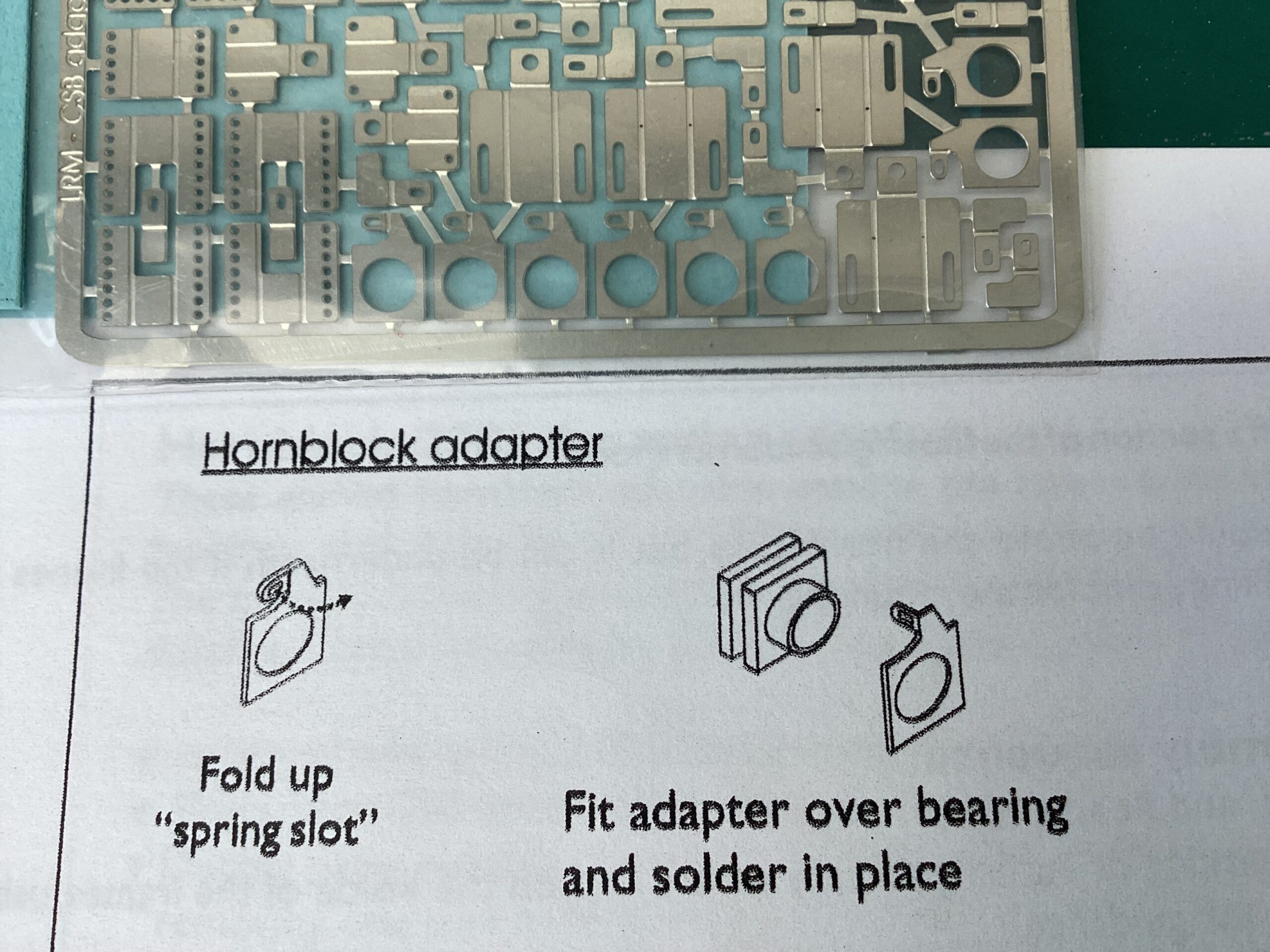
The LRM hornblocks have a circular extension, over which fits an etched bracket – a photo is worth a thousand words, so I include a shot of the instructions and fret, below. I have toyed with the idea of soldering a pivot directly to the top of the hornblock. In hindsight, it would have been far easier to leave the powered axle in a plain bearing, but I hadn’t anticipated the lack of clearance, and had fancied a stab at using CSB suspension. This is very much a learning exercise for me. Cheers.Attachments:
-
June 1, 2023 at 12:31 pm #245160Stuart FirthParticipant
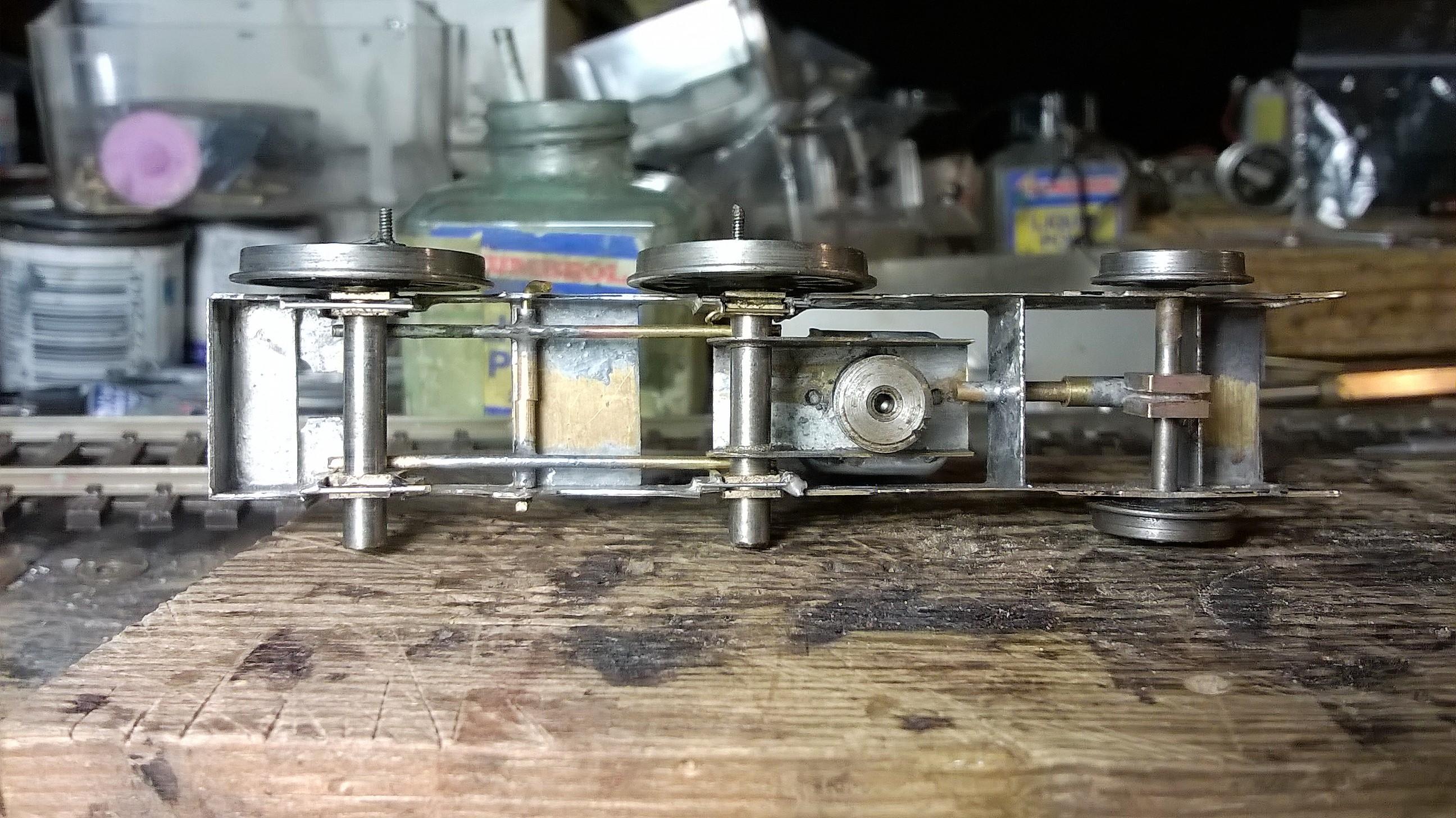
Thanks for the comments. The build is very interesting. It certainly is more of a faff than compensation, but they claim it runs silky smooth, so I would like to try it in the future. Perhaps the extra slim version of the High Level hornblock is the way to go. (Picture of ropey but functional chassis attached!)
-
June 3, 2023 at 10:02 pm #245193
Paul Willis
Participant-
June 3, 2023 at 10:23 pm #245195Paul TomlinsonParticipant
I was at Scalefour Crewe today, and among other things bought some High Level hornblocks and CSB tags. I fancy giving them a go as I think I’m making the job more difficult than it need be… anyway, I’ll have a play and post when I’ve made some progress…
The issue as I see it with resting the beam directly on the square bearing is the broad contact point – quite what the effect is, I don’t know, but I would imagine that for optimum performance, the smaller contact area the better. Just a theory…
-
-
June 3, 2023 at 10:06 pm #245194Participant
-
June 4, 2023 at 10:04 pm #245206Participant
Attachments:
-
June 4, 2023 at 10:10 pm #245208Participant
-
June 20, 2023 at 5:29 pm #245418Paul TomlinsonParticipant
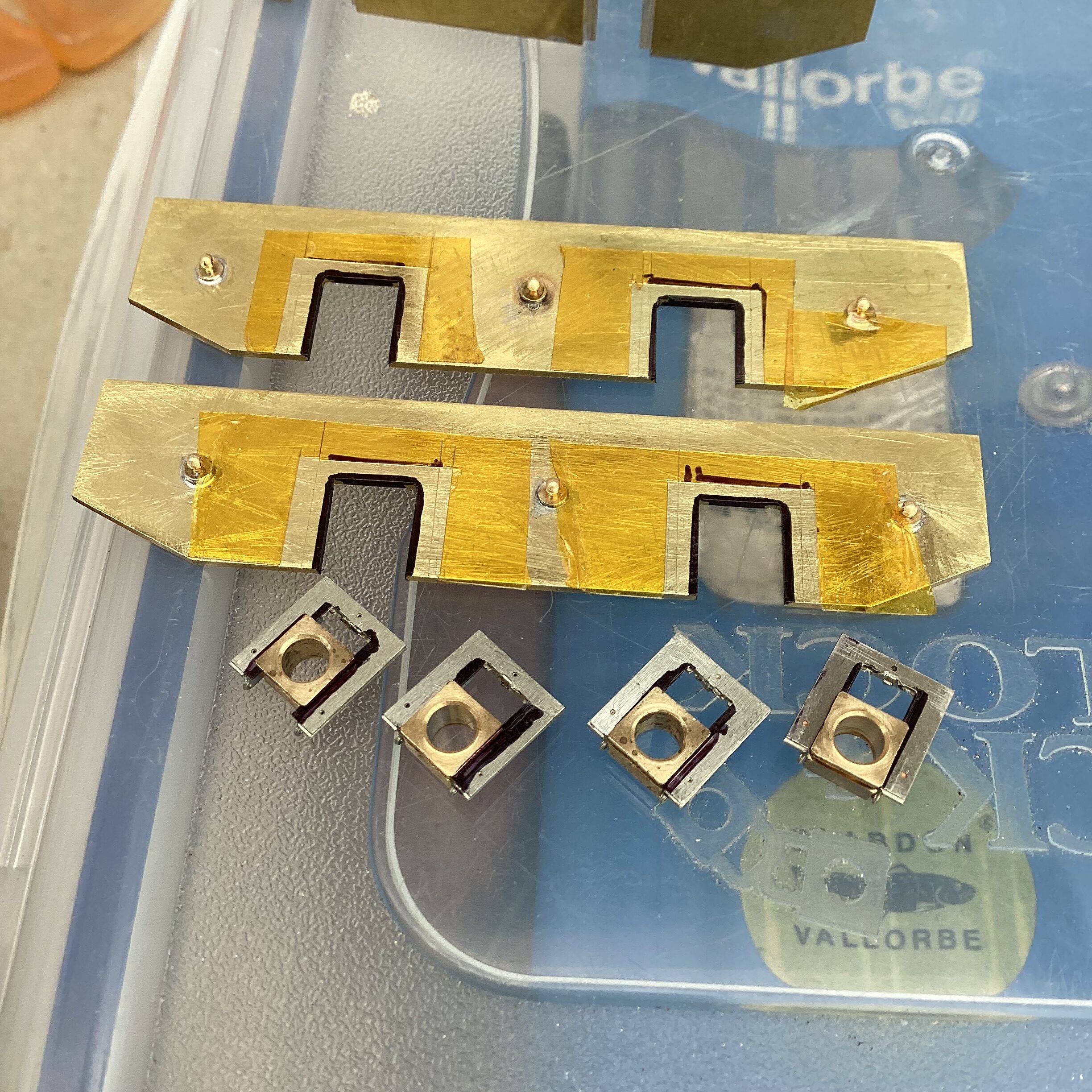
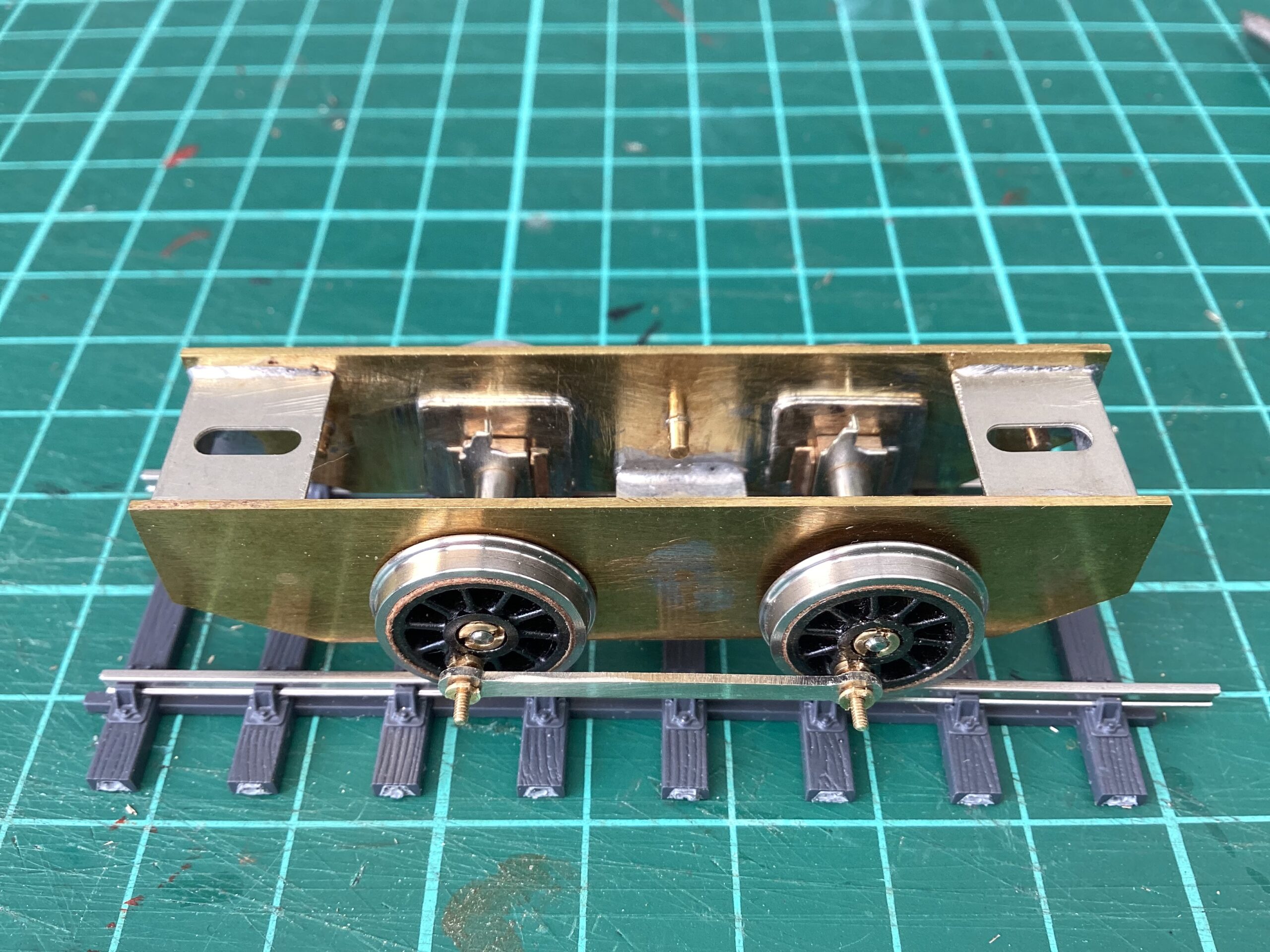
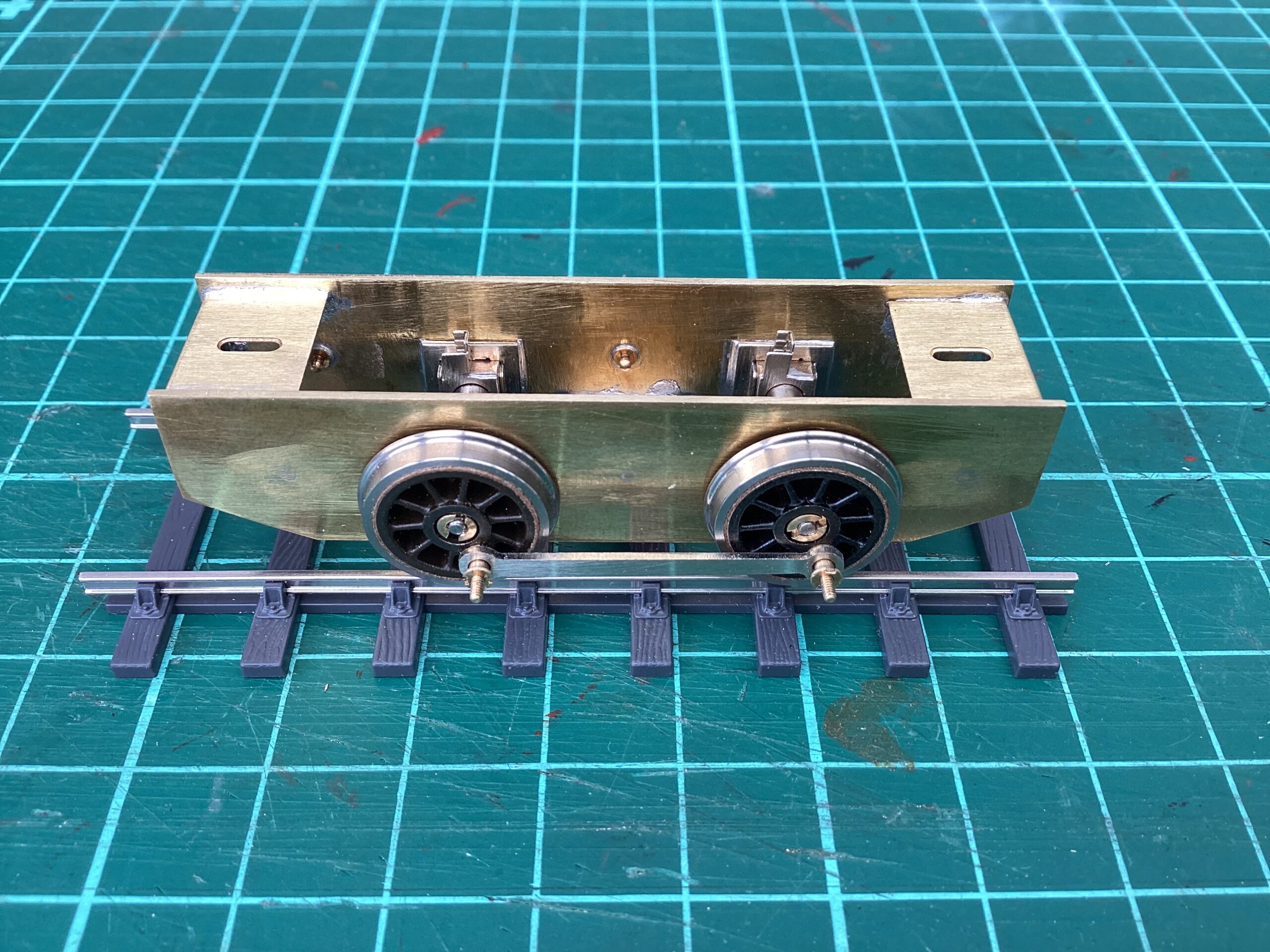
Some progress has been made, and I’ve reached another head-scratching moment… I’ve started afresh, so there’s now mk1 and mk2 frames. After I’d had chance to reflect a bit, I cleaned up mk1 to erase some of the excess solder, and applied the iron to re-seat a couple of the horncheeks so they sat truly flush with the frames. I’ve got a set of self-clamping tweezers, which helped enormously. I soldered on the csb tags to the hornblocks, and filed the inner face smooth. I’m altogether more happy with the result. I’d used a set of 7mm knobs for the csb anchors, which line up ok with the LRM tags, but as the High Level tags sit closer to the frame, I decided to set about a second chassis, along identical lines to the first, but using 4mm anchors. Not wanting to repeat the battle aligning the horncheeks, I decided to try a different approach. I’d used the vertical drill on my Unimat to drill the rods at 26mm centres, so I made a jig out of the most suitable material to hand, again using the graduated feed on the lathe bed to drill axle holes to match the rods. A bit of a gamble, but I’m hopeful for a successful outcome. After applying a bit of black marker to try and stop the solder creeping and jamming everything up, and a bit of hot tape on the frames for a similar reason, I used the jig, and the tweezers, to attach the horncheeks in the flat, then assembled the frames using the Comet jig. I thought I’d have more clearance between the hornblocks to slot the gearbox in, but both frames are pretty much identical.
-
June 20, 2023 at 5:44 pm #245423Paul TomlinsonParticipant
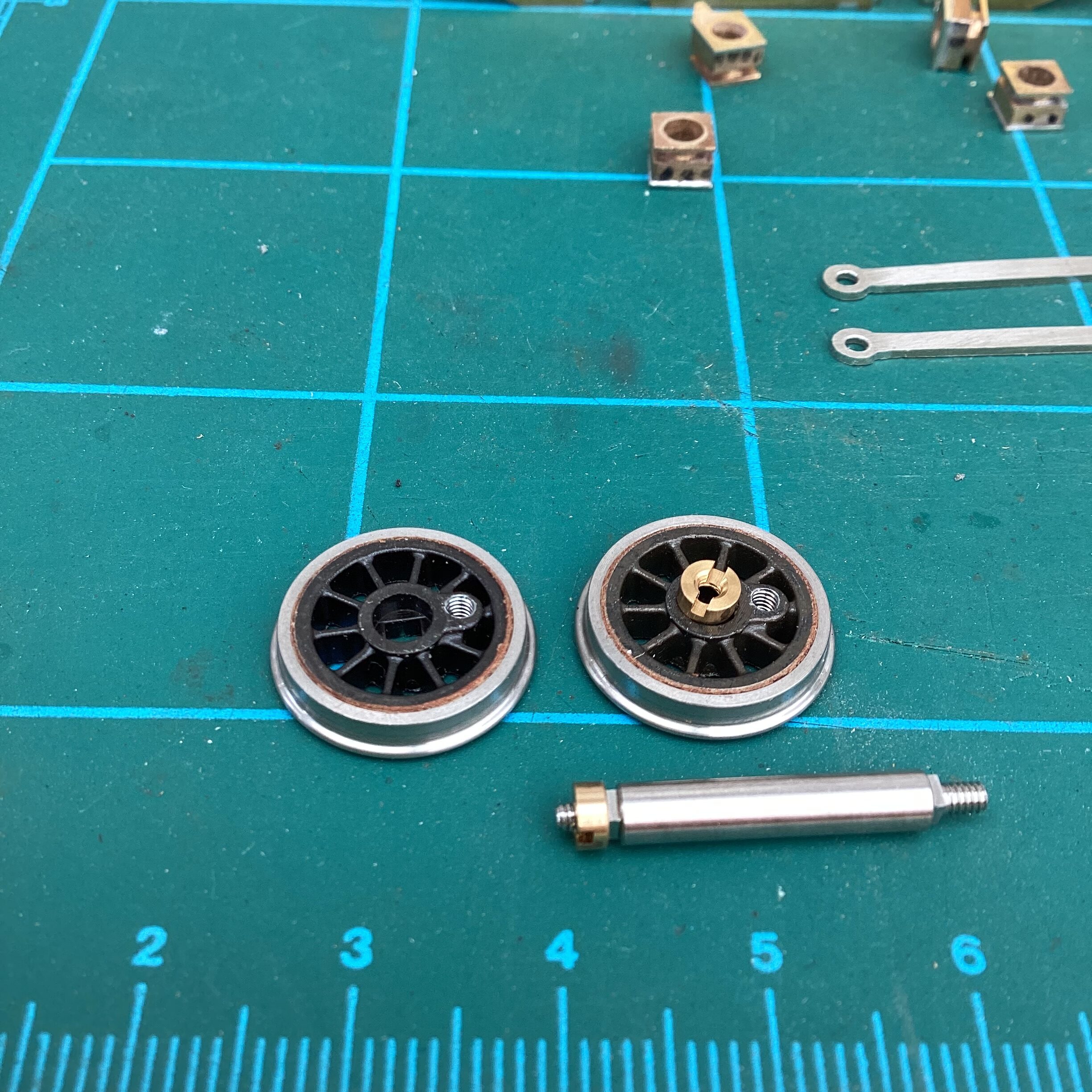
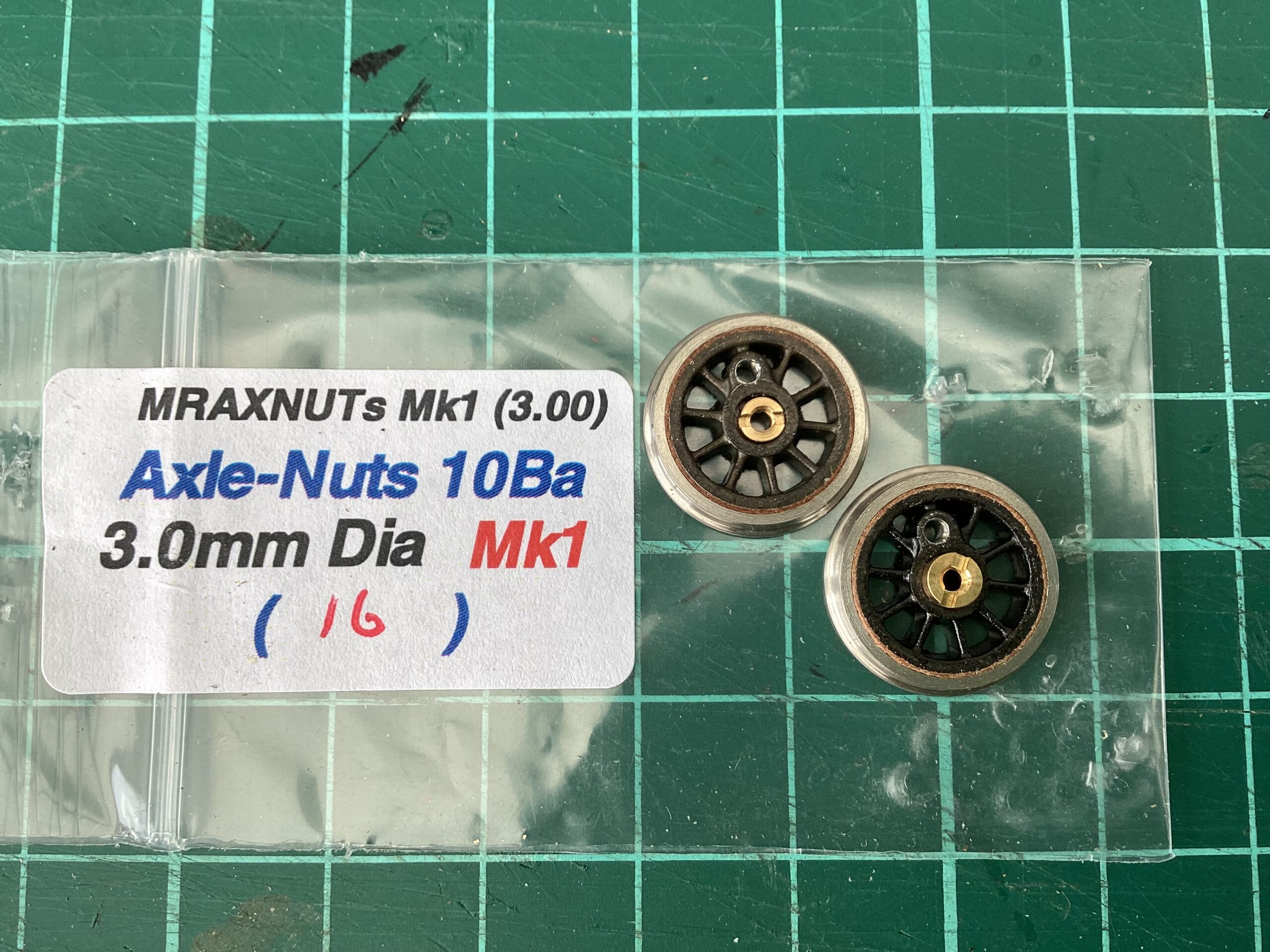
I’d hoped to have mounted the wheels before posting, so I could check that everything ran smoothly, but have hit a couple of snags with the wheels from Markits. First was the squared axle wouldn’t enter the wheel. I’m used to this, Slaters 7mm wheels typically need a bit of careful easing, removing burrs using a fine square file. So I did a bit of gentle filing, taking care to give each face in turn the same attention, until the axle end could be eased in. The second snag is when I came to add the locking nut, I found it was fractionally too large to enter the socket in the wheel – so I called it a day. I contacted Markits, who kindly sent me a set of smaller locking nuts, which easily fit within the recess. I’m not sure if these are part of their normal range, I haven’t seen any mention of them elsewhere.
-
This reply was modified 3 years, 3 months ago by
 Paul Tomlinson.
-
This reply was modified 3 years, 3 months ago by Paul Tomlinson.
Attachments:
-
This reply was modified 3 years, 3 months ago by
-
June 24, 2023 at 12:12 pm #245447Paul TomlinsonParticipant
To the relief of the Chief Engineer, both run smoothly. I’m using the threaded crankpins on this build, the bushes will need filing to length.
Attachments:
-
August 20, 2023 at 6:31 pm #245890Paul TomlinsonParticipant
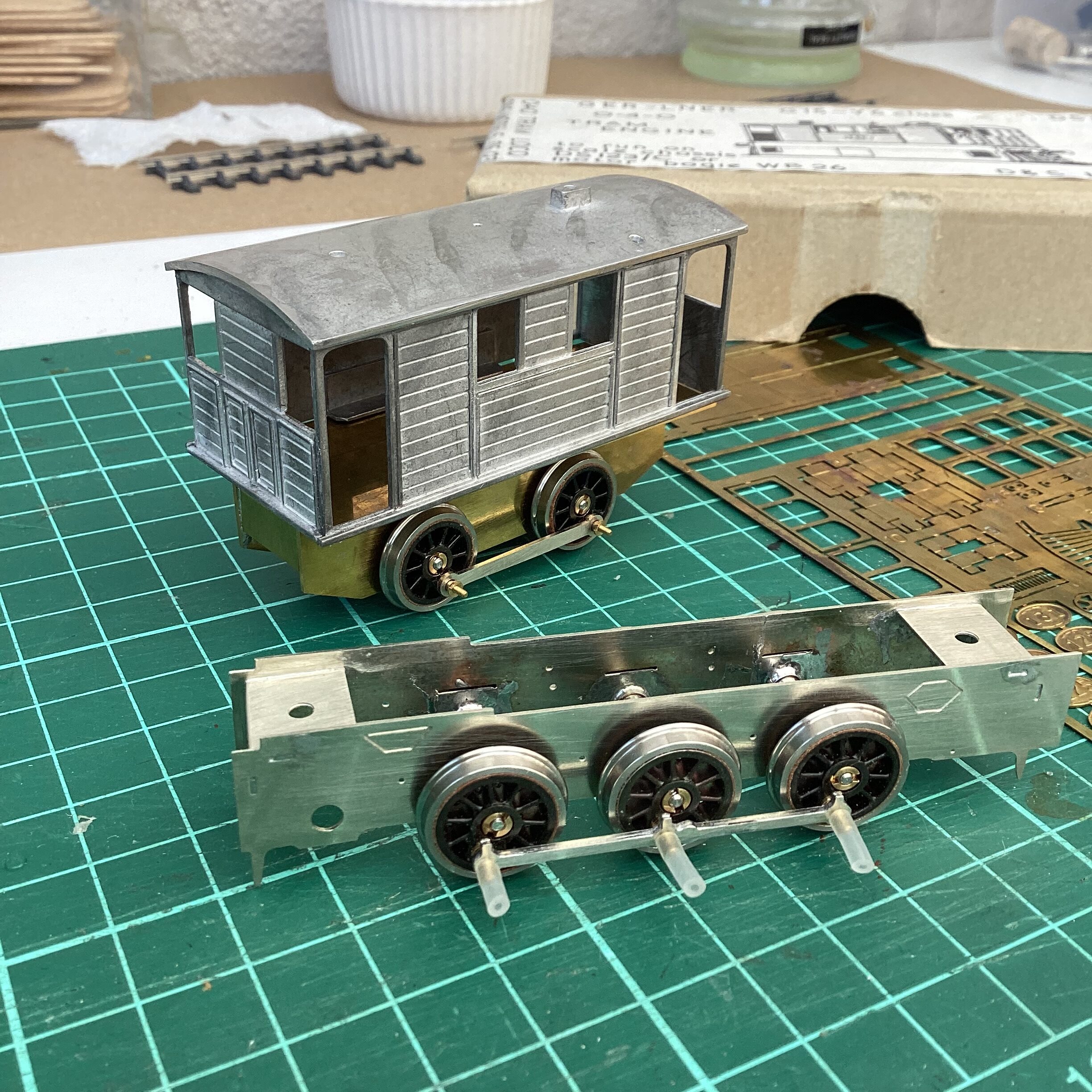
I diverted a bit and assembled a couple of Branchlines Drewry 04 chassis kits – rigid this time – and used what Markits wheels I had left to create one rolling chassis. It took me a surprising amount of time to achieve a smooth-running chassis, but I got there eventually. Over the last few days I’ve gone back to the Y6, fettling the castings (which were very good and distortion-free) and today assembling the upper body. With the castings being very fine, and probably irreplaceable, I used cyano gel to stick them together. At the moment I’ve got a shed on wheels. I have issues with the design of the lower body, so’ll be doing a bit of scratchbuilding to accommodate the scale mainframes I built.
Attachments:
-
August 21, 2023 at 2:19 pm #245895Stuart FirthParticipant
Looking good – what’s the plan for the drivetrain?
-
August 21, 2023 at 3:30 pm #245898Paul TomlinsonParticipant
Cheers, Stuart. For the Y6, I bought a High Level Slimliner at Scalefour Crewe, and one of his 1219 coreless motors. I’ve yet to decide upon the way I restrain the motor, so it allows the CSB to do it’s business. Maybe a loose loop of wire over the far end. I’ll mount a piece of copper-clad under the central spacer and try my hand at making some of the curly phosphor-bronze pickups like Paul W used on his. There’s an interesting article by Will L on the Scalefour forum about how to make them.
I also bought a couple of RoadRunners, I think, for the Drewry’s, with 1320 coreless motors. They’ll both be rigid chassis, so I’ll use a bit of double-sided tape to hold the motors in place. I’ll write that up when I get round to them.
-
-
August 21, 2023 at 10:39 pm #245916Participant
-
August 22, 2023 at 8:46 am #245919Paul TomlinsonParticipant
Cheers, Paul, noted…
-
This reply was modified 3 years, 1 month ago by Paul Tomlinson.
-
This reply was modified 3 years, 1 month ago by
-
-
August 22, 2023 at 9:23 am #245921
Bob Allison
ParticipantPaul T,
Have you seen this solution by Dave Bradwell, taken from the Scalefour Forum?
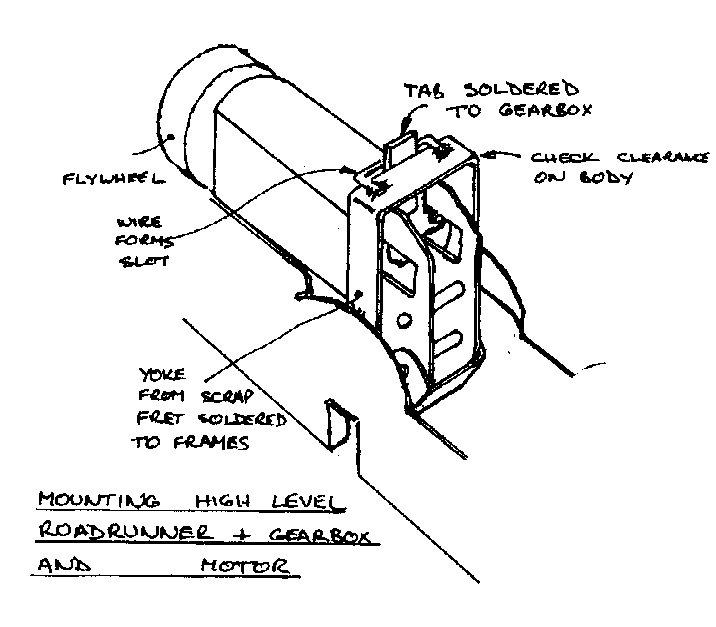
-
August 22, 2023 at 10:38 am #245922Paul TomlinsonParticipant
Thanks, Bob, I hadn’t seen it – looks like he’s designed the mount to allow the box to move vertically, but prevented from rotating by the tab-and-slot. Food for thought…
-
-
August 22, 2023 at 7:40 pm #245931Participant
Exactly so, Paul. The driven axle must be allowed to move vertically and tilt sideways, or the springing is ineffective.
Dave B has a reputation for coming up with straightforward, well engineered solutions, so you can be sure that anything he recommends will work properly.
Bob
-
-
AuthorPosts

- Only logged in EMGS members can reply to this topic