
› Members Forum › Skills and Knowledge Centre › Couplings › AJ (and variants) height gauge
- This topic has 0 replies, 1 voice, and was last updated 1 year, 6 months ago by
 John Cutler.
-
AuthorPosts
-
-
December 22, 2024 at 1:06 pm #250611
 John CutlerParticipant
One lesson from my coupling tests is that a consistent height of couplings at the point of (hopeful!) contact is essential. I mistakenly thought that it would be sufficient to use a datum vehicle to act as a standard. However, I discovered that this gave cumulative problems, especially in regard to fixed loco couplings where awkward fixing sites give rise to angled coupling shafts.
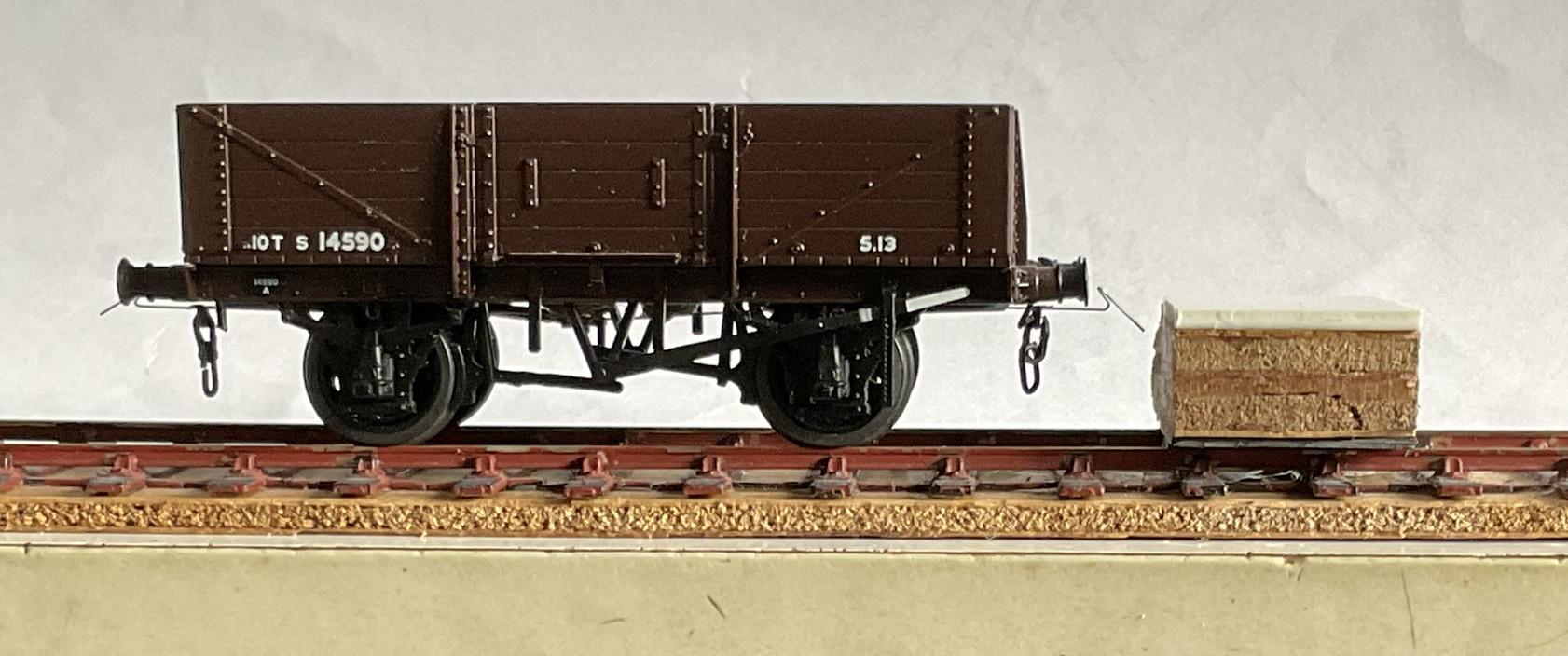
So I determined to make a simple height gauge from sandwiched layers of ply and plastic. The top layer is white plastic so it is easy to discern the level. The bottom layer was cut to fit between the rails so was 18.2mm wide (but I discovered some C&L RTL flexitrack was only 18.1mm!). I made the mistake of not shaping that bottom layer to allow for chairs hence the messy grooves from filing on the layer above; you should chamfer the edges before affixing the bottom layer to the sandwich. Allow 0.1mm for glue thickness between each layer.
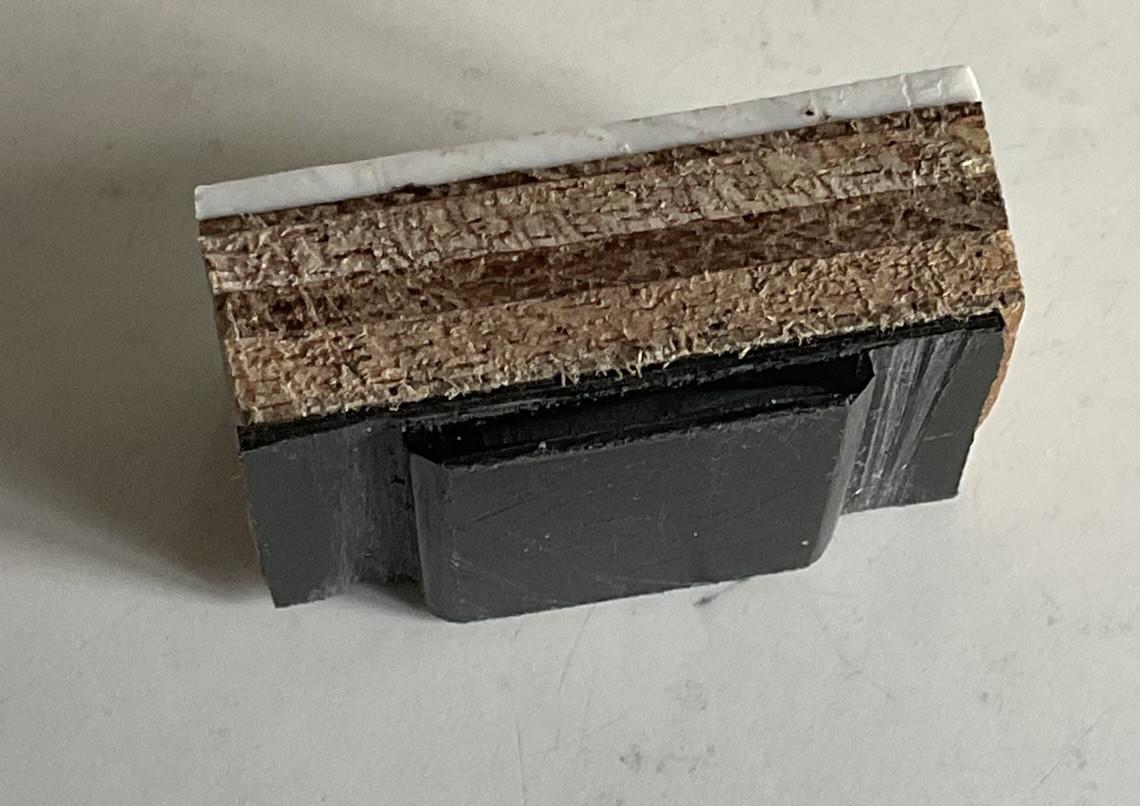
The advantage of a DIY gauge is that you can set the height you want; in my case 11mm+ above the rails. For standard AJs the height should be set at precisely 10mm above the rails; that height is that of the end of the horizontal shaft. (For AAJs it should be 12mm).
Why not use the EMGS AJ coupling centre/height gauge (£5.25)? Well that looks like a visual centreing device where you have to judge that the shaft is in the centre of a circle; a bit iffy for me. I could be wrong. Unfortunately there is no info on how it works. It is not the same as the jig in the EMGS Manual at 9.2.3.(3) which looks much more reliable to use for standard AJs. That is no longer available from the EMGS Stores; do not ask me why.
I do not think a lateral centreing gauge is worthwhile for EM. The slop in the rail-wheel contact plus the wheel bearing sideways slop can give an erroneous result; wiggle a short wheelbase wagon on your track and you will soon see why. Just line up the coupling in line with, or slightly offset to, the prototype coupling hook on the vehicle.
-
-
AuthorPosts
- Only logged in EMGS members can reply to this topic